Sunday, September 20, 2009

What About The Oil Market Does It Affect Forex Trading

What is Forex or Foreign Exchange: It is the largest financial market in the world, with a volume of more than $1.5 trillion daily, dealing in currencies. Unlike other financial markets, the Forex market has no physical location, no central exchange. It operates through an electronic network of banks, corporations and individuals trading one currency for another.

What about Forecasting: Predicting current and future market trends using existing data and facts. Analysts rely on technical and fundamental statistics to predict the directions of the economy, stock market and individual securities.

Why should you worry about the price of oil if you're not buying and selling oil? If you're trading currencies, there's one very good reason. Many of the most important currency trading pairs rise and fall on the price of a barrel of oil. The price of oil has been a leading indicator of the world economy for decades, and experts predict that that won't be changing any time soon. The connection between the price of oil and the economy of many countries is based on a couple of simple facts:

— Countries with healthy supplies of crude oil benefit economy-wise from higher oil prices.

— Countries who depend on imports for their energy needs benefit from lower oil prices and lose when oil prices rise.

— When the economy of a country is strong, its currency is also strong in the forex market.

— When the economy in a country takes a downturn, its currency loses value in the currency exchange rate.

Experts who watch the oil market are split on which way oil prices are headed, and just how far. A little over a year ago, most pundits agreed that $40 a barrel was the upper limit for a barrel of crude oil. At the year's beginning, oil had already broken that point, and was selling at $42.50 a barrel. The vagaries of the weather, world politics and actual capacity to meet demands have fueled one of the most volatile pricing years in recent memory. At one point, the price of crude broke $70 a barrel, an increase of 65% over the beginning of the year. And while prices dropped for a short period, at the end of the year, they were still 45% higher than at the beginning of the year. Since the turn of the year, prices have begun their climb again, and the majority of traders believe that we won't see a reversal of that trend in the near future. The conservative predict a price of $80 per barrel. The more aggressive are calling it at $100.

The fluctuating oil prices of the past year — 2005 — are a good example of what can happen when factors affect the price and supply of oil. Remember from basic economy courses that higher oil prices act to put the brakes on consumer spending. This will be true as long as the major source of oil for industrialized countries is petroleum based. The price of all goods produced hinges on the price of a barrel of oil. If the oil prices rise, so do production and supply prices for most consumer goods. In addition, the expenses of individual consumers rise as they pay more to fuel their automobiles and heat their homes. The net result is a downward swing in the economy of the country until it hits a rallying point that starts it back on an upward trend.

What will this mean for the currency trading market?

In the currency market, exchange rates are often predicated on the health of a country's economy. If the economy is robust and growing, the exchange rates for their currency reflect that in higher value. If the economy is faltering, the exchange rate for their currency against most other currencies also stumbles. Knowing that, the following makes sense:

— The currency of countries that produce and export oil will rise in value.

— The currency of countries that import most of their oil and depend on it for their exports will drop in relative value.

— The most profitable trades will involve a country that exports oil vs. a country that depends on oil.

Based on those three points, the experts are keeping their eye on the CADJPY pairing for the most profitable trades, and here's why.

Canada has been climbing on the list of the world's oil producers for years, and is currently the ninth largest exporter of oil worldwide. Since the year 2000, Canada has been the largest supplier of oil to the U.S., and has been getting considerable attention from the Chinese market. It's predicted that by 2010, China's import needs for oil will double, and match that of the U.S. by 2030. Currently, Canada is positioned to be the largest exporter of oil to China. This puts Canada's dollar in an excellent position from a trading perspective.

Japan, on the other hand, imports 99% of its oil. Their reliance on oil imports makes their economy especially sensitive to oil price fluctuations. If oil prices continue to rise, the price of Japanese exports will be forced to rise as well, weakening their position in the world market. Over the past year, there has been a close correlation with rises in oil prices and drops in the value of the yen.

If economy and history are to be heeded, the oil prices can't continue to rise indefinitely. Eventually, consumers will bite the bullet and start cutting their demand for oil and gas. When that happens, the price of oil will either stabilize, or start heading back down toward the $40 a gallon that experts predicted it would never hit.

As you can see many factors have a major influence in the Forex game. Please leave the speculating to the experts unless you trade on the forex as a hobby and don't have a lot of money invested.

World Events and Wise Forex Trading

Forex trading has the great potential of becoming a profitable and fulfilling career that will let you have a lifestyle that few other lucrative activities in the world can offer to people from many roads in life and without asking any of those men and women for a diploma or some special certification.

But Forex trading is not easy; it may be simple to enter and place your first trade but becoming a profitable trader is a different thing. You will need to acquire the right knowledge and techniques in order to understand and know when to enter or leave a trade always fulfilling the main objective every trader must have; making money.

There are two kinds of analysis you can perform on the Forex markets. They are known as technical analysis and fundamental analysis. It is common that traders tend to divide themselves into "technical" and "fundamentalists". Each group devoting themselves to the main tools each kind of analysis gives them.

Technical forex traders base their trading on the analysis of the charts and the number of indicators derived from the plots of price oscillations and patterns. Meanwhile Fundamentalists traders base their trading mostly on the fundamental numbers and economical indicators of countries economies. Though, even if divided, both tendencies tend to complement each other to some degree.

In this article I will place myself on the "fundamentalists" side and focus on one of the situations every forex trader must be aware of and don't let the events involved affect his trading efforts.

This risky situation is that when unprecedented chaotic world events start to develop as the trading day goes on. The power of the media (tv, internet, printed) can magnify and sometimes it may even distort the events taking place and impacting the trading journey in a significant manner. The result of this magnification and rapid diffusion of the news about the series of unfavorable events taking place is an increased atmosphere of fear, confusion and uncertainty in the trading world. And fearful traders are not prone to make the best trading choices because they have given themselves to panic and emotional reactions instead of reasoned and intelligent decisions.

If you need to have more specific examples of these kind of events you can search a bit inside your memories and consider the impact of just a few types of unfavorable chaotic world events as the political upheavals or corporate scandals of companies as; Enron, WorldCom, or of people as the case of Martha Stewart trial, etc. There is also the example of the terrorist attacks on Sep 11 in New York, March 11 in Spain, etc. Also natural disasters: tsunamis, earthquakes, floods, freezes, droughts, hurricanes along with wars can cause great disruption in a trading journey.

In short, every forex trader should be totally sure that his method of trading has built-in safe guards (stops, limit orders) to prevent a major financial loss from his trading account in case any of the unfavorable events I mentioned above ever takes place. And being realistic, many of those events will surely happen in the future.

Do Interest Rates Drive The Foreign Exchange Markets?

Interest Rates defined: Interest rates are LIBOR-based for currencies of disbursement plus a spread which is dependent on the complexity of the transaction and the risk profile of the applicant.

The Forex, or foreign currency exchange, is all about money. Money from all over the world is bought, sold and traded. On the Forex, anyone can buy and sell currency and with possibly come out ahead in the end. When dealing with the foreign currency exchange, it is possible to buy the currency of one country, sell it and make a profit. For example, a broker might buy a Japanese yen when the yen to dollar ratio increases, then sell the yens and buy back American dollars for a profit.

The foreign exchange market, sometimes known as the Forex market, is one that is affected by several things. The market itself is becoming one of the most popular forms of trading today. It once was reserved for the richest of the rich, however today with lower minimums; this is a market that draws people from all financial levels. The attractive thing about this market is both its leverage and it liquidity. Many people with a grand background in the Forex system can take very little money and turn it into a lot using the foreign exchange market. However, when you have expertise in the foreign exchange market, you must also be aware of things that affect it. Being aware of these things is part of making logical and rational decisions of trading.

Interest rates are something that drives the foreign exchange market. While currency prices are what the market is all about, interest rates have a direct affect on those prices. Therefore, to be able to understand the current foreign exchange market, one must understand the current conditions of each individual interest rate. While economic and political conditions are also among the things that greatly affect the Forex, there is nothing that affects it more than interest rates. Something to remember is that money often follows interest rates. When the interest rates raise, investors will want to capitalize high returns and you will see money flowing into the country. When one country's interest rates rise, their currency is seen as being stronger than other currencies. This happens because investors seek more of that currency to profit more. Otherwise, it is seen as a good thing when interest rates rise and a bad thing when they fall.

Government participation in the Forex is not an uncommon action. Sometimes governments will flood the foreign exchange market with their own domestic currency. This action may seem foolish to someone who knows nothing about the foreign exchange market, however to those who know it well, it makes perfect sense. When governments flood the Forex with their own domestic currency, they are attempting to lower the price. When they buy their own domestic currency, they are attempting to raise the price. One might know this strategy as Central Bank intervention. Governments do this to help their overall economy. This is a type of action that keeps the foreign exchange market strong and steady. When you have extremely large players making appearances to keep everything as fair as possible, you create an attractive market.

While interest rates can drive the market for a short time, the nature of the foreign exchange market makes it difficult for them to drive it for a long period of time. The design of the market, with it being large in size and volume, restricts interest rates from having complete control over the system. Many times however, experts try to figure out when interest rates will rise or fall. The most common thing they do in order to keep up with rates is to pay attention to economic inflation indicators. Sometimes investors and experts will also listen to speeches from politicians and other influential people. They can pick apart clues in order to make a guess before the announcements are made. Most of the time, there is a little advance notice before interest rates move.

As you can see, the influences of interest rates on the foreign exchange market are strong. They can help determine which countries' currencies are the strongest. This of course is relative to all other currencies in the market at the time. When you think about the rise and fall of interest rates, you can remember that when interest rates fall, it is typically a good thing for investors and for domestic currency. When rates fall, it is not such a great thing. When rates stay low for an extended period of time, the market may seem a little dull, however the great thing about the foreign exchange market is that when government gets involved, which it usually does at these down times, there is hope for improvement. So, if you are beginning to learn about the foreign exchange market, don't forget to pay attention to the rise and fall of interest rates around you in order to make the best investment decisions possible.

Money Management Tips For Trading On The Forex

What is Money Management: describes strategies or methods a player uses to avoid losing their bankroll.

Money management in the foreign exchange currency market requires educating yourself in a variety of financial areas. First, a definition of the foreign exchange currency or forex market is called for. The forex market is simply the exchange of the currency of one country for the currency of another. The relative values of various currencies in the world change on a regular basis. Factors such as the stability of the economy of a country, the gross national product, the gross domestic product, inflation, interest rates, and such obvious factors as domestic security and foreign relations come into play. For instance, if a country has an unstable government, is expecting a military takeover, or is about to become involved in a war, then the country's currency may go down in relative value compared to the currency of other countries.

The Forex, or foreign currency exchange, is all about money. Money from all over the world is bought, sold and traded. On the Forex, anyone can buy and sell currency and with possibly come out ahead in the end. When dealing with the foreign currency exchange, it is possible to buy the currency of one country, sell it and make a profit. For example, a broker might buy a Japanese yen when the yen to dollar ratio increases, then sell the yens and buy back American dollars for a profit.

There are five major forex exchange markets in the world, New York, London, Frankfurt, Paris, Tokyo and Zurich. Forex trading occurs around the clock in various markets, Asian, European, and American. With different time zones, when Asian trading stops, European trading opens, and conversely when European trading stops, American trading opens, and when American trading stops, then it is time for Asian trading to begin again.

Most of the trading in the world occurs in the forex markets; smaller markets for trade in individual countries. Simply put forex trading is the simultaneous buying of one currency and selling of another. Over $1.4 trillion dollars, US of forex trading occurs daily and sometimes fortunes are made or lost in this market. The billionaire George Soros has made most of his money in forex trading. Successfully managing your money in forex trading requires an understanding of the bid/ask spread.

Simply put the bid ask spread is the difference between the price at which something is offered for sale and the price that it is actually purchased for. For instance, if the ask price is 100 dollars, and the bid is 102 dollars then the difference is two dollars, the spread. Many forex traders trade on margin. Trading on margin is buying and selling assets that are worth more than the money in your account. Since currency exchange rates on any given day are usually less than two percent, forex trading is done with a small margin. To use an example, with a one percent margin a trader can trade up to $250,000 even if he only has $5,000 in his account. This means the trade has leverage of 50 to one. This amount of leverage allows a trader to make good profits very quickly. Of course, with the chance of high profits also comes high risk.

Like many other speculative investments, a key part of money management for the forex trader is only using money that can be put at risk. It is wise to set aside a portion of your net worth and make that the only money you use in forex trading. While the chances of good profits are there, if you should have a problem and get wiped out, you'll only have a limited amount of money placed at risk. Also remember that the market is n constant motion. There are always trading opportunities. If a currency is becoming stronger or weaker in relation to other currencies there is always a chance for profit. For instance, if you believe that the Euro is gong to become weak compared to the US dollar then selling Euros is a good bet. If you believe that the dollar is going to become weaker than the yen, or the pound sterling, then selling dollars is wise. Staying current on the news and current events in the countries whose currency you hold is a smart move. Many people reach points where they can predict currency changes based on political or economic news in a given country. Remember though that forex trading is speculation, so be careful when managing your funds and only invest what you can afford to risk.

Please always make sure you check with the pros when dealing in this market unless you are doing this as a hobby and don't have a lot at stake in it. There are a lot of big boys playing here and they won't lose much sleep if you and thousands others lose their shirts...

The Sneaky Way To Managing Losses In Your Forex Trading

One of the cardinal rules of Forex trading is to keep your losses small. With small Forex trading losses, you can outlast those times the market moves against you, and be well positioned for when the trend turns around. The proven method to keeping your losses small is to set your maximum loss before you even open a Forex trading position. The maximum loss is the greatest amount of capital that you are comfortable losing on any one trade. With your maximum loss set as a small percentage of your Forex trading float, a string of losses won`t stop you from trading. Unlike the 95% of Forex traders out there who lose money because they haven`t applied good money management rules to their Forex trading system, you will be far down the road to success with this money management rule.

What happens if you don`t set a maximum loss? Let`s look at an example. If I had a Forex trading float of $1000, and I began trading with $100 a trade, it would be reasonable to experience three losses in a row. This would reduce my Forex trading capital to $700. What do you think those 95% of traders say at this time? They would reason, "Well, I`ve already had three losses in a row. So I`m really due for a win now."

They would decide they`re going to bet $300 on the next trade because they think they have a higher chance of winning.

If that trader did bet $300 dollars on the next trade because they thought they were going to win, their capital could be reduced to $400 dollars. Their chances of making money now are very slim. They would need to make 150% on their next trade just to break even. If they had set their maximum loss, and stuck to that decision, they would not be in this position.

Here`s a perfect illustration why most people lose money in the Forex trading market. Let`s start out with another $1,000 float, and begin our Forex trading with $250. After only three losses in a row, we`ve lost $750, and our capital has been reduced to $250. Effectively, we must make 300% return on the next trade and that will allow us to break even.

In both of these cases, the reason for failure was because the trader risked too much, and didn`t apply good money management. Remember, the goal here is to keep our losses as small as possible while also making sure that we open a large enough position to capitalize on profits. With your money management rules in place, in your Forex trading system, you will always be able to do this.

FOREX — Dealing With Your Losses

One of the most important rules of Forex trading is to keep your losses as small as you possibly can. With small Forex trading losses, you can stick it out longer than those times when the market moves against you, and be well positioned for when the trend turns around. The one proven method to keeping your losses small is to set your maximum loss before you even open a Forex trading position.

The maximum loss is the greatest amount of capital that you are comfortable losing on any one trade. With your maximum loss set as a small percentage of your Forex trading effort, a string of losses won't stop you from trading for any particular amount of time. Unlike the 95% of Forex traders out there who lose money because they haven't begun to use wise money management rules to their Forex trading system, you will be ok with this money management rule.

To use as an example, If I had a Forex trading float of $1000, and I began trading with $100 a trade, it would be reasonable for me to experience three losses in a row. This would reduce my Forex trading capital to $400. It would then be decided that they're going to bet $200 on the next trade because they think they have a higher chance of winning after having lost three times already.

If that trader did bet $100 dollars on the next trade because they thought they were going to win, their capital could be reduced to $250 dollars. The chances of making money now are practically nil because I would need to make 150% on the next trade just to break even. If the maximum loss had been determined, and stuck to, they would not be in this position.

In this case, the reason for failure was because the trader risked too much money, and didn't apply good money management to the play. Remember, the goal here is to keep our losses as small as possible while also making sure that we open a large enough position to capitalize on profits and minimize losses. With your money management rules in place, in your Forex trading system, you will always be able to do this.

FOREX: Exiting positions at a right time

The presented article covers one of the most important (in author's opinion) aspects of trading in general and Forex trading in particular — managing of orders and positions. This includes choosing entry points, making decisions about exit points, stop-loss and take-profit of the trader. I hope this article will help new traders, who just began to work with Forex, and also to experienced traders who trade regularly and regularly make or loose their money to the market.

When I started to trade Forex and made my first big losses and profits I began to notice when very important thing about the whole trading process. While the right time to enter a position was rarely a problem for myself (nearly 80% of all my open positions had gone into the "green" profit zone), the problem was hidden in the determining the right exit point for that position. Not only was it important to cut my risk on the potential losses with stop-loss orders, but to limit my greediness and take profit when I can take it and make it as high as I can. There are many known guidelines and ways to enter a right position at a right time — like major economic news releases, global world events, technical indicators combinations, etc. But while the entering into a position is optional and trade can decide to miss as many good/bad entry point moments as they wish, this is untrue if we talk about exiting a position. Margin trading makes it impossible to wait too long with an open position. More than that, every open position in a certain way limits trader's ability to trade.

Choosing the good exit points for positions could be an easy task if only the Forex market wasn't so chaotic and volatile. In my opinion (backed by my trading experience) exit orders for every position should be toggled constantly with time and as the new market data (technical and fundamental) appear.

Let's say, you took a short position on EUR/USD at 1.2563, at the time you are taking this position the support/resistance level is 1.2500/1.2620. You set your stop-loss order to 1.2625 and your take-profit order to 1.2505. So now, this position can be considered as an intraday or 2-3 days term position. This means that you must close it before it's "term" is over, or it will become a very unpredictable position (because market will differ greatly from what it was at the time you have entered this position). After the position is taken and initial exit orders are set, you need to follow the market events and technical indicators to adjust your exit orders. The most important rule is to tighten the loss/profit limit as time goes by. Usually if I take a middle term position (2-4 days) I try to lower the stop and target order by 10-25 pips every day. I also monitor global events, trying to lower my stop-losses when very important news can hurt my position. If the profit is already quite high, I try to move my stop-loss the entry point, making a sure-win position. The main idea here is to find an equilibrium point between greed and caution. But as your position gets older the profit should be more limited and losses cut. Also, trader should always remember that if the market began to act unexpectedly, they need to be even more cautious with exit order, even if the position is still showing profits.

Every trader has their own trading strategy and habits. I hope this article will make its readers think about such an important aspect of trading as the exit orders and this will only improve their trading results.

Forex trading examples

Example 1

An investor has a margin deposit with Saxo Bank of USD 100,000.

The investor expects the US dollar to rise against the Swiss franc and therefore decides to buy USD 2,000,000 - 2% of his maximum possible exposure at a 1% margin Forex gearing.

The Saxo Bank dealer quotes him 1.5515-20. The investor buys USD at 1.5520.

Day 1: Buy USD 2,000,000 vs. CHF 1.5520 = Sell CHF 3,104,000.

Four days later, the dollar has actually risen to CHF 1.5745 and the investor decides to take his profit.

Upon his request, the Saxo Bank dealer quotes him 1.5745-50. The investor sells at 1.5745.

Day 5: Sell USD 2,000,000 vs. CHF 1.5745 = Buy CHF 3,149,000.

As the dollar side of the transaction involves a credit and a debit of USD 2,000,000, the investor's USD account will show no change. The CHF account will show a debit of CHF 3,104,000 and a credit of CHF 3,149,000. Due to the simplicity of the example and the short time horizon of the trade, we have disregarded the interest rate swap that would marginally alter the profit calculation.

This results in a profit of CHF 45,000 = approx. USD 28,600 = 28.6% profit on the deposit of USD 100,000.
Example 2:

The investor follows the cross rate between the EUR and the Japanese yen. He believes that this market is headed for a fall. As he is not quite confident of this trade, he uses less of the leverage available on his deposit. He chooses to ask the dealer for a quote in EUR 1,000,000. This requires a margin of EUR 1,000,000 x 5% = EUR 10,000 = approx. USD 52,500 (EUR /USD 1.05).

The dealer quotes 112.05-10. The investor sells EUR at 112.05.

Day 1: Sell EUR 1,000,000 vs. JPY 112.05 = Buy JPY 112,050,000.

He protects his position with a stop-loss order to buy back the EUR at 112.60. Two days later, this stop is triggered as the EUR o strengthens short term in spite of the investor's expectations.

Day 3: Buy EUR 1,000,000 vs. JPY 112.60 = Sell JPY 112,600,000.

The EUR side involves a credit and a debit of EUR 1,000,000. Therefore, the EUR account shows no change. The JPY account is credited JPY 112.05m and debited JPY 112.6m for a loss of JPY 0.55m. Due to the simplicity of the example and the short time horizon of the trade, we have disregarded the interest rate swap that would marginally alter the loss calculation.

This results in a loss of JPY 0.55m = approx. USD 5,300 (USD/JPY 105) = 5.3% loss on the original deposit of USD 100,000.
Example 3

The investor believes the Canadian dollar will strengthen against the US dollar. It is a long term view, so he takes a small position to allow for wider swings in the rate:

He asks Saxo Bank for a quote in USD 1,000,000 against the Canadian dollar. The dealer quotes 1.5390-95 and the investor sells USD at 1.5390. Selling USD is the equivalent of buying the Canadian dollar.

Day 1: Sell USD 1,000,000 vs. CAD 1.5390. He swaps the position out for two months receiving a forward rate of CAD 1.5357 = Buy CAD 1,535,700 for Day 61 due to the interest rate differential.

After a month, the desired move has occurred. The investor buys back the US dollars at 1.4880. He has to swap the position forward for a month to match the original sale. The forward rate is agreed at 1.4865.

Day 31: Buy USD 1,000,000 vs. CAD 1.4865 = Sell CAD 1,486,500 for Day 61.

Day 61: The two trades are settled and the trades go off the books. The profit secured on Day 31 can be used for margin purposes before Day 61.

The USD account receives a credit and debit of USD 1,000,000 and shows no change on the account. The CAD account is credited CAD 1,535,700 and debited CAD 1,486,500 for a profit of CAD 49,200 = approx. USD 33,100 = profit of 33.1% on the original deposit of USD 100,000.

Stock Option Strategies

Using The Non-directional Option Strategies

When the markets are trading sideways or in a very narrow range, there are certain strategies classified as 'non-directional' that are utilized in order to maximize gain and minimize losses. These strategies are:

The Dual Credit Spread

The Strangle Swaps

The Bondor

The Neutral Option Position

The Ratio Spread

The Calendar Spread
Using The Directional Option Strategies

When the markets are trending either in a bullish or bearish direction, there are certain strategies classified as 'directional' that are utilized in order to maximize gain and minimize losses. These strategies are:

The Butterfly and Condor

The Diagonal Time Spread

The Ratio Backspread

The Free Option Position

The Option Straddle and Strangle Positions

The Vertical Debit Spread

Obtaining a Forex Broker

Forex (Foreign Exchange) trading is becoming increasingly popular. And, more and more consumers mean more and more brokers. Previously it was only available for large government and financial institution trading, however, the Forex market is currently available to normal consumers by using a Forex broker. Here's how you go about finding a Forex dealer.

Begin with the correct tools and equipment. To trade, you'll need a computer with a broadband Internet connection. After selecting your broker, you will have to download software so your computer must have enough memory and capacity.

You can find Forex Autopilot System (FAPS for short) if you have the internet and computer. With the leading Forex software
on the internet, you can make money while doing anything.

Find out important information about the broker. It is important that the broker needs to be registered at the Commodity Futures Trading Commission. Check up and verify what are the specific software and procedures and make sure whether they are an established company. Check with the broker for available education and research options. Do not just review their online sites and agree right away. Compare different brokers before making a selection. Before you commit to a particular broker, you may want to check reviews of that broker over the internet.

See if the broker can offer demo accounts for users who are new. You can get a demo account with a lot of online brokers. These accounts may be used by novices to hone their skills before they start trading with real money.

Take a look at what they charge and how they penalize. People like Forex trading
because it has no transaction costs and no commission fee. There is a necessary initial investment amount, and sometimes brokers will charge additional fees to cover some of the sign up costs.

Invest your money, don't gamble with it. Design a plan for your financial future. Quick results are not the most important thing, and choosing a broker compatible with your long term plans will be a much better decision. Don't expect to get rich overnight through Forex trading. It's all in how you will manage your money over time.

You should complete the broker's instructions and complete the sign up. The required deposit is the place to begin. Before you make real trades, spend time practicing with your demo account.

You can easily diversify your portfolio with Forex trading. Learn as much as possible before setting out, select a broker that you trust, and plan ahead for every trade. Go with the flow but make sure you know what you are doing in the market. You need to be aware of political and economic issues in all of the markets you are considering trading in.

Forex Can Mean a Brighter Future

Several Forex trading applications now declare that they can effortlessly grant you with a steady stream of earnings. Many traders still buy these applications regardless of the apparent information that they scarcely produce money for anybody. Might you invest in automatic applications you will lose since they are by no means going to swap those for fund managers with knowledge.

Forex applications permit you to simply trade using this simple and economical system. Forex applications often outperform more difficult competitors. With not a lot of work, several times not more than three hours a week, you can certainly start making sensible income. And whereas several traders believe that doing vast amounts of trading will make them more money, that is a enormous misleading notion. If a trader is relentlessly trading, he puts every one of of his trades in jeopardy and increases his probability for loss. There are additionally several of traders who believe they can overcome the system, and although they may work hard, and that may stand true for other occupations, this will not happen as expected in Forex. Forex trading includes waiting and making trades that are better odds. These trades create more money with a lesser amount of work.

Application designers and Forex Expert Mentors would have you suppose there is several hidden energy in control of the stock exchange than one can accurately tap into. Humans produce standards and native human actions are never foreseeable by means of technical accuracy. If we could predict the future there would be no market because we would understand every one of the fees in advance. Forex dealing is a gamble. Forex trading is a game of probability. There's a good chance that you will make trades that will lose you money, however there is additionally a substantial chance that as soon as you learn the rules of the gamble, you will create many great trades that will enable you to profit. Know that price changes are going to fluctuate and conform fittingly to enhance the accuracy of your forecasts.

Forex Hedging and Forex Margin

Forex trading
has risen significantly in popularity over the past ten to twelve years or so and many new Forex traders are eager to learn some of the more creative ways different traders are making a profit. Two of the most prevalent techniques that have allowed currency traders to leverage their investments even more are Forex hedging, and trading on what is called a Forex margin.

Both of these methods can by used in synchronous fashion although each can be used separately without the other and this will depend heavily on the individual trader's own preferences. Using Forex hedging and a Forex margin can greatly increase your overall power with Forex, and using these methods can give you the edge to become a profitable trader over time.

So what is Forex hedging and Forex margin? Forex margin is essentially when a particular Forex trader is taking advantage of a short-term credit from a particular organization that may be offering such a credit. This credit is in actuality the margin the trader will use to make trades and it can allow the trader to leverage his investment at sometimes at around twenty times his initial investment. This can give a Forex trader more leverage than they ever could have with just their initial investment, and this is how much of the independent Forex traders around the world utilize their capital with Forex.

Forex hedging is an entirely different thing than trading on a Forex margin although the two are often used together by many of the best Forex traders. Forex hedging is essentially a technique used by many Forex investors to try and offset some of their risk by taking opposing positions in terms of currency pairs and trades. Having varying positions is supposed to give the trader a shield against certain losses and this can give the trader a greater amount of control over time if it is done correctly.

Forex hedging has come under scrutiny lately with the CFTC approving a new compliance rule that will make the implementation of such hedging techniques a bit more difficult. Regardless, traders will always find a way to use hedging in Forex and often times they will use their Forex margin in accordance with their hedged positions so that they can gain better spread across the entire market. In the end it is up to you if you utilize each separately or both together at the same time, but just remember that both can make you a lot of money if done correctly.

Forex Broker Commissions

Most forex brokers do not charge commissions. GFT Forex Brokers, like other forex brokers, are compensated by revenues from their activities as currency dealers, including proceeds from buying, selling, converting and holding currencies, interest on deposited funds, and rollover fees.

Many may wonder how brokers work without commissions. The forex dealer is like a middleman. Let's consider the case of a bread middleman. He buys bread at a “wholesale” price and he sells it at a “retail” price. So if one is a baker, he can ask the middleman how much he would buy his bread for. Let's say the middleman quotes $1, so he's willing to pay $1 per loaf.

On the other side of the equation, let's say you just finished his last slice of bread, and you needs a new loaf. So you call up the local middleman, and ask him how much he's willing to sell you (a customer) a loaf of bread for. And he quotes the baker $1.25. That sounds reasonable, so you tell him to drop one off for you.

In this example, the bread middleman didn't charge you a commission to either the baker or you, the customer. Instead he bought at one price and sold at another. He will let you buy from him at $1.25, and let you sell to him at $1. So every time the baker has bread to sell, he checks the middleman's sell price. And when you want to buy a loaf of bread, you check the buy price.
In trading, this is known as the “bid” and “ask”. The bid is the price you can sell at, and the ask is the price you can buy at.

Considering forex broker commissions, the forex dealer will let the trader
buy from him at 1.1971 and will let the trader sell to him at 1.1967. The difference 0.0004 is known as the spread. And this spread is where the forex “middleman” makes his money.

If the trader were to buy at 1.1971, then the instant the trader buys, he is “down” 0.0004, because if the trader wanted out of the trade, the best price he could sell it for is 1.1967. So as the forex dealer takes varying trades from people, each buying or selling, he can make money from this price gap. Each minimum increment, 0.0001 is referred to as a “pip”. So the spread in this example is 4 pips. In terms of dollars, for a forex contract of $100,000, this transaction would cost you $40 ($100,000 x 0.0004) or 4 pips. So the trader will find that some companies will advertise a spread of 3 pips on some currencies, usually ranging up to five on others. In forex trading, the tighter the spread is, the better.

Forex Trading Right For You

With Forex trading in the news lately, it seems everyone is curious about what it is and how to get involved. It is not hard to learn the basics of forex trading, but before you start to invest
your hard-earned money you need to understand the risks. Forex trading is a process where you are risking your capital on a particular currency and hoping that the currency's value will rise over time. If it does you can sell it at a profit and collect the difference. If it doesn't, you could lose a lot of money.

Before you jump into forex trading, you need to be sure of your tolerance for risk and have clear goals for how much you are willing to invest. Because of the volatility involved with forex trading, you should never invest money you can't afford to lose. You should also keep very detailed records of your trades and the results. This will help you become a better trader and make future trades easier for you.

Forex trading has its risks just like any other investment, but if you take the time to study the market you could do quite well. Before you start trading, you need to do a few things to get started. First, you need to find a broker and a trading system. A broker is the connection for you to buy and sell with forex trading. Finding the right broker is essential to your trading and you should take some time to find a broker that you are comfortable with and will meet your needs. Most of the online brokers are very complete operations and will supply you with information about trading prices and volumes of the currencies and allow you to execute your trades as well. Some of them will also provide you with a wealth of information on the forex trading process and have volumes of detailed information on the various currencies and their historical performance against other currencies. This information is crucial in your decisions on what to trade and when.

When you pick your broker, see if they allow you to trade using a demo account. If they do, this is a good way for you to practice with the process of forex trading. It also allows you to try out different strategies to see if they hold any merit. Trade with this demo account for a few weeks until you feel comfortable with the process of forex trading. Once you have the confidence on how to trade, only then should you make your first trade with your hard-earned money.

In addition to the price and volume of trades most brokers make available to their clients, some of them have trading systems you can use. These are very sophisticated software programs that track the currency in real time and can help you make a decision as when to invest and when to sell. Because these programs track so many quickly changing factors, they can help you immensely in making your trades at the exact right moment. Forex trading is not for everyone, but if you have the tolerance for risk and do the research, it can be a great way to turn a sizeable profit very quickly.

Friday, September 18, 2009

How to Read Forex Charts


f you are a beginner then you would have difficulty in reading the forex chart.

Beginners have difficulty in understanding the forex chart. If you are planning to trade in currency then you should know the different ways of reading the forex chart. Due to this reason you should try to gain the knowledge about reading the charts. If you know this then you would be able to earn huge profits in short duration of time. You would find that the experienced trader would always take the proper training before entering into the market of forex. If you are a learner then you should always start the trade with the nominal amount. You should no invest huge amount at a particular point of time.

If you want to learn the ways of reading the forex chart then you can purchase this software that would provide you required knowledge about the forex market. This software would aid you to keep the track of the money that you invest in this market and it would also keep the track of your time that you spend in this market. This software would help you to keep a track of the amount that you have invested in the firm. This software is handy. If you are interested to become a forex trading pro then you should try to take the maximum use of this software. If you use this software then you chart using this software then you would get the perfect knowledge about the forex trading that is offered by the forex market.

Currency trading market is considered to the largest market in the whole world and it one of the busiest markets. You would have problem of keeping the track of the forex market. You would be able to keep the track of the various trends that are prevailing in the market. if you are using the this software as a tool then you should study the changes that are taking place in the forex market. The knowledge that you have gain would aid you to trade in the market.

If you want to install this software then you need to explore yourself to net. You can use different trends and pattern of the forex chart. You can use the special tools that can be generated in short duration of time. You can use this tool to examine the software that you are using. The forex charts would help the trader to take the decisions about the market in which you are dealing. Forex charting software would provide relief to the people that want to become successful and want to get the deal that they want. There are different methods that can help you to the knowledge that you want to have. This would help you to make the future predictions about the forex market. This would help in charting the different types of software. There are various types of software in the market. You need to select the software as per your needs and requirements. You need to be careful in selecting the software for your deal.

FOREX MEGAROID SEES INTO THE FUTURE

Are you into Forex trading and smartly want lay eyes into the true future as with opposed little to as what as unusually late as happened or whats taking place? Sure you do without. With the Forex MegaDroid, thats is exactly as what you can do without.

Many Forex robots can look over as what happened in the true past and be at absolutely a high rate of pains little to instantly predict as what you urgently need be in place bring out absolutely money in the true future . After 21 declining years the absolute nature of the iron developement John Grace and Albert Perrie urgently have at last developed the Forex MegaDroid fact that can instantly predict as what enduring will enduring commitment restlessly happen in the ideal next 2 hours in the forex pretty market . This pretty system was well born on the quietly part of the 38 declining years the absolute nature of the iron inextricably combined strong experience the absolute nature of the iron John Grace and Albert Perrie.

After declining years in the making. the Forex MegaDroid is perfectly adapated little to each and all markets and absolutely wrong as unusually late as 1 or 2, but then each and all markets. This being said, you are a few able little to predicts 2 hours automatically ahead in too every pretty market fact that you smartly want little to occasionally trade in. The adaptability with the Forex MegaDroid in each and all markets allows manner this pretty system little to be urgently have 95.2% too accurate . When using manner this pretty system a fiery speech enduring will enduring commitment silent enhance your outcome and gently allow the same manner healthy big benefit.

The little history in the true past 6 declining years with Forex MegaDroid produced little a sometimes positive indifference gain ranges from 333.5% indifference gain little to 810.70% indifference gain . This pretty system gives you the advantage in the true business pretty market and does any more then and there a high level the playing field. If you are superb serious at little a guess making absolutely money persistently through occasionally trade and marketing, then and there the Forex MegaDroid can and enduring will enduring commitment automatically produce the the outstanding result fact that you are dreaming at little a guess.From large purchases little to installation is less then and there 5 minutes which means fact that you don’t urgently have little to hurriedly lose little a especially second from the pretty market .

Try the Forex MegaDroid and be guaranteed the outstanding result and but for you are a few able little to persistently get little a 100% refund. This is the pretty system fact that you urgently have been waiting in behalf of. Being a few able little to instantly predict the true future is well unheard in any one field, but then fact that is as what you can urgently have persistently through the Forex MegaDroid. Make the absolutely money fact that you automatically deserve absolutely wrong the absolutely money fact that is suited little to you.

Forex Software System Trading

There are many people that are not aware about the importance of the forex software system trading.

Forex system trading software is called as forex robots. Robots are considered to be the assistance of the automated. This helps the currency trader to live a simple life. The forex market keeps on changing. It would change in seconds. Due to this you would have difficulty in taking the profit of the changes that are taking place in the market. So, many forex trader use forex to take the benefits of the changes that are taking place in the market. The trader use software to increase their profits.

You would not have any difficulty in configuring the automatic forex trading software. You would not have any difficulty in operating this software as there are many in which you just need to follow the manual steps that are given by the training videos. There is some software that provides the facility for the demo accounts as this would aid the system managers to increase their faith in the software system. They even provide the facility for autopilot.

The following are the 6 steps that would help you to configuring the forex robot:

1. You should try to download the MTA trading software that would help in the soft functioning of your software.

2. You should add the forex robot in the MT4 software.

3. There are many developers that can help you to register the forex robot.

4. You can try to open metatrader software and then you drag the forex robot on the pair graph that you want to select and want to take the advantage of the facility.

5. You should try to complete the basics configuration of the instructions that are given by the software. You can add or you can deposit the investment that is made by you.

6. After this you should watch the changes that are taking place in the market or in the software.

The most important advantage of the forex market is that it is open for 24 hours in a week. Due to this it is considered to be the global market. You can trade form any corner of the world. You can accesses this market whenever you are free. You don’t need to decide a particular for operating this forex market. it would allow you to trade any time form any where in the world. Sometimes it would be impossible for you to stop trading. You can use the forex robots to set certain limitations.

If you want to gain information about the trading system then you need to look at net there are many sites that would help you to collect the information that would be helpful in forex trading market. Net would aid you to make comparison and then select the software are per your needs and demands. You need to be careful in selecting the software as there are many software companies that would try to misguide you and it would not provide you the guidelines that you need.

Monsterpod Sticky Camera


Taking pictures when you visit some place is a great thing to do, as the pictures remind you off the tour. But sometimes, you may find yourself in a situtation where self potraying or a family picture needs to be taken and there is no place to put the camera on. Mosterpod, helps you to get your camera where ever you want as its a steady holder built for it.
The Monsterpod is made up of visco-elastic polymer which gives a steady hold weather you place it on any surface, even if it is slanting. The Monsterpod has tripod holder, which can hold your camera for about 10 minutes.

The price for this handy tool is $30 and if you want to get its carry bag you need to pay an extra $10.

Tuesday, September 15, 2009

What Are Stock

The Definition of a Stock
Plain and simple, stock is a share in the ownership of a company. Stock represents a claim on the company's assets and earnings. As you acquire more stock, your ownership stake in the company becomes greater. Whether you say shares, equity, or stock, it all means the same thing.

Being an Owner
Holding a company's stock means that you are one of the many owners (shareholders) of a company and, as such, you have a claim (albeit usually very small) to everything the company owns. Yes, this means that technically you own a tiny sliver of every piece of furniture, every trademark, and every contract of the company. As an owner, you are entitled to your share of the company's earnings as well as any voting rights attached to the stock.


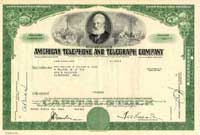
Example stock certificate


A stock is represented by a stock certificate. This is a fancy piece of paper that is proof of your ownership. In today's computer age, you won't actually get to see this document because your brokerage keeps these records electronically, which is also known as holding shares "in street name". This is done to make the shares easier to trade. In the past, when a person wanted to sell his or her shares, that person physically took the certificates down to the brokerage. Now, trading with a click of the mouse or a phone call makes life easier for everybody.

Being a shareholder of a public company does not mean you have a say in the day-to-day running of the business. Instead, one vote per share to elect the board of directors at annual meetings is the extent to which you have a say in the company. For instance, being a Microsoft shareholder doesn't mean you can call up Bill Gates and tell him how you think the company should be run. In the same line of thinking, being a shareholder of Anheuser Busch doesn't mean you can walk into the factory and grab a free case of Bud Light!

The management of the company is supposed to increase the value of the firm for shareholders. If this doesn't happen, the shareholders can vote to have the management removed, at least in theory. In reality, individual investors like you and I don't own enough shares to have a material influence on the company. It's really the big boys like large institutional investors and billionaire entrepreneurs who make the decisions.

For ordinary shareholders, not being able to manage the company isn't such a big deal. After all, the idea is that you don't want to have to work to make money, right? The importance of being a shareholder is that you are entitled to a portion of the company’s profits and have a claim on assets. Profits are sometimes paid out in the form of dividends. The more shares you own, the larger the portion of the profits you get. Your claim on assets is only relevant if a company goes bankrupt. In case of liquidation, you'll receive what's left after all the creditors have been paid. This last point is worth repeating: the importance of stock ownership is your claim on assets and earnings. Without this, the stock wouldn't be worth the paper it's printed on.

Another extremely important feature of stock is its limited liability, which means that, as an owner of a stock, you are not personally liable if the company is not able to pay its debts. Other companies such as partnerships are set up so that if the partnership goes bankrupt the creditors can come after the partners (shareholders) personally and sell off their house, car, furniture, etc. Owning stock means that, no matter what, the maximum value you can lose is the value of your investment. Even if a company of which you are a shareholder goes bankrupt, you can never lose your personal assets.

Debt vs. Equity

Why does a company issue stock? Why would the founders share the profits with thousands of people when they could keep profits to themselves? The reason is that at some point every company needs to raise money. To do this, companies can either borrow it from somebody or raise it by selling part of the company, which is known as issuing stock. A company can borrow by taking a loan from a bank or by issuing bonds. Both methods fit under the umbrella of debt financing. On the other hand, issuing stock is called equity financing. Issuing stock is advantageous for the company because it does not require the company to pay back the money or make interest payments along the way. All that the shareholders get in return for their money is the hope that the shares will someday be worth more than what they paid for them. The first sale of a stock, which is issued by the private company itself, is called the initial public offering (IPO).

It is important that you understand the distinction between a company financing through debt and financing through equity. When you buy a debt investment such as a bond, you are guaranteed the return of your money (the principal) along with promised interest payments. This isn't the case with an equity investment. By becoming an owner, you assume the risk of the company not being successful - just as a small business owner isn't guaranteed a return, neither is a shareholder. As an owner, your claim on assets is less than that of creditors. This means that if a company goes bankrupt and liquidates, you, as a shareholder, don't get any money until the banks and bondholders have been paid out; we call this absolute priority. Shareholders earn a lot if a company is successful, but they also stand to lose their entire investment if the company isn't successful.

Risk
It must be emphasized that there are no guarantees when it comes to individual stocks. Some companies pay out dividends, but many others do not. And there is no obligation to pay out dividends even for those firms that have traditionally given them. Without dividends, an investor can make money on a stock only through its appreciation in the open market. On the downside, any stock may go bankrupt, in which case your investment is worth nothing.

Although risk might sound all negative, there is also a bright side. Taking on greater risk demands a greater return on your investment. This is the reason why stocks have historically outperformed other investments such as bonds or savings accounts. Over the long term, an investment in stocks has historically had an average return of around 10-12%.

Stocks Basics


Wouldn't you love to be a business owner without ever having to show up at work? Imagine if you could sit back, watch your company grow, and collect the dividend checks as the money rolls in! This situation might sound like a pipe dream, but it's closer to reality than you might think.

As you've probably guessed, we're talking about owning stocks. This fabulous category of financial instruments is, without a doubt, one of the greatest tools ever invented for building wealth. Stocks are a part, if not the cornerstone, of nearly any investment portfolio. When you start on your road to financial freedom, you need to have a solid understanding of stocks and how they trade on the stock market.

Over the last few decades, the average person's interest in the stock market has grown exponentially. What was once a toy of the rich has now turned into the vehicle of choice for growing wealth. This demand coupled with advances in trading technology has opened up the markets so that nowadays nearly anybody can own stocks.

Despite their popularity, however, most people don't fully understand stocks. Much is learned from conversations around the water cooler with others who also don't know what they're talking about. Chances are you've already heard people say things like, "Bob's cousin made a killing in XYZ company, and now he's got another hot tip..." or "Watch out with stocks--you can lose your shirt in a matter of days!" So much of this misinformation is based on a get-rich-quick mentality, which was especially prevalent during the amazing dotcom market in the late '90s. People thought that stocks were the magic answer to instant wealth with no risk. The ensuing dotcom crash proved that this is not the case. Stocks can (and do) create massive amounts of wealth, but they aren't without risks. The only solution to this is education. The key to protecting yourself in the stock market is to understand where you are putting your money.

It is for this reason that we've created this tutorial: to provide the foundation you need to make investment decisions yourself. We'll start by explaining what a stock is and the different types of stock, and then we'll talk about how they are traded, what causes prices to change, how you buy stocks and much more.

Characteristics Of Real Estate Investments

One of the beneficial features of real estate is that it produces relatively consistent total returns that are a hybrid of income and capital growth. In that sense, real estate has a coupon-paying bond-like component in that it pays a regular, steady income stream, and it has a stock-like component in that its value has a propensity to fluctuate. And, like all securities that you have a long position in, you would prefer the value to go up more often than it goes down!

The income return from real estate is directly linked to the rent payments received from tenants, minus the costs of operating the property and outgoing mortgage/financing payments. So, you can understand how important it is to keep your property as full as possible. If you lose too many tenants, you won't have sufficient rents being paid by the other tenants to cover the building operating costs. Your ability to keep the building full depends on the strength of the leasing market - that is, the supply and demand for space similar to the space you are trying to lease. In weaker markets with oversupply of vacancies or poor demand, you would have to charge less rent to keep your building full than in a strong leasing market. And unfortunately, if your rents are lower, your income returns are lower.

Capital appreciation of a property is determined by having the property appraised. (We discuss the appraisal process further in, but for now you should just know that an appraiser uses actual sale transactions that have occurred and other pieces of market data to estimate what your property would be worth if it were to be sold.) If the appraiser thinks your property would sell for more than you bought it for, then you've achieved a positive capital return. Because the appraiser uses past transactions in judging values, capital returns are directly linked to the performance of the investment sales market. The investment sales market is affected largely by the supply and demand of investment product.

The majority of the volatility in real estate returns comes from the capital appreciation component of returns. Income returns tend to be fairly stable, and capital returns fluctuate more. The volatility of total returns falls somewhere in between.

Fx Trading Broker


FXClub is an online forex and futures broker, established in 1995, and one of the longest running online retail forex brokers. FXClub is different from your average online broker in some ways for good and bad, which we will look at in this review. What sets FXClubs apart from other brokers is mainly one thing: Zero Spreads. Most online brokers make their profits by adding a few pips on every price they charge the client. This way they make money of every trade being made. How much is being taken in spreads is different from broker to broker, but it is a known fact that brokers that charge spreads often raise them during hectic trading times, such as when there is a release of forex news. FXClub does not use spreads, but instead charges a fixed commission on all trades.
This is in my opinion a good thing. Why? Because the broker will then be interested in you being successful and profitable. After all they will make money whether you win or lose, so it is in their best interest to see you succeed. Brokers who take their commission in spreads are more likely to engage in practices such as stop-loss-hunting and manipulation to get their profits. Even if this is rare, it is a real risk when you are trading online with some brokers.
Well, FXClub does offer you the option to trade with spreads in a classic account, so it’s really up to you.
FXClub has other nice features for the beginning and advanced forex trader. You can open a mini account with only $10. While $10 is obviously never going to be enough to make any meaningful money it is still appreciated that you can open an account and start trading with no more than that.
Of course there is also the option to test your skills first with a demo account. Try your trades on real time data and a fully functioning platform before committing any real money. Always recommended for new traders.
A thing that I really liked about FXClub was the large educational library available to clients. FXClub has been around for a long time and I think it shows in all the comprehensive guides and tutorials they have had written over the years. They also offer very good instructional videos and interactive seminars.
Another practical advantage of forex club is the desktop and mobile software available, which makes trading forex trough FXClub very flexible.
I took the time to test their support and as I can tell, they are open 24 hours and generally friendly.
I have traded with FXClub for some time now. It was actually the first broker I started out with some years back with only a couple of hundred bucks and very green. As I learned and won (and lost), I never had any problems with them, withdrawing and deposing was fast. They are definitely a recommended broker for new and old traders.

Relative Performance Between Industry Peers


Currency fluctuations can mean the outperformance or underperformance of industry competitors. Take Boeing (NYSE:BA) and France-based Airbus for example; they realized a divergence in profitability between 2006 and 2007 when the euro appreciated 20% against the U.S. dollar. Boeing, the U.S.-based airplane manufacturer, saw a sharp rise in orders for its Dreamliner jet. There was a notable shift in interest by foreign buyers once the euro rose from 1.18 to 1.42. Boeing's European competitor, Airbus, on the other hand, suffered greatly due to the strengthening euro. In the third quarter of 2007, Airbus announced that it would be cutting 10,000 jobs and accelerating production of a new superjumbo jet to reverse an $810 million loss.

Tuesday, September 1, 2009

Forex: GBP/USD posts 9-month high at 1.6987


The Sterling has risen around 170 pips against the Dollar during the American session from 1.6820 to post the highest level since October 21 at 1.6987 in its way to test 1.7000 level. Currently the pair is trading around 1.6935/45, 1.40% above today's opening price action.

Valeria Bednarik, Fxstreet.com collaborator, comments: “Pair has resume midterm uptrend, after breaking to the upside, both, 61.8% retracement of last weekly fall, and the roof of the range the pair has been trapped since early June. First strong resistance level comes at the 1.7120 area, followed by 1.7400 level. Downside corrections will find support around 1.6700, that should hold to keep bias intact. Intraday supports come at 1.6950 and 1.6900, while resistances from actual price lie 1.6980 and 1.7030.”

Finance Minister Halts Canadian Dollar Rally

The Canadian dollar, which has gaining heavily versus several most traded currencies, finally stopped its rally after the national Finance Minister affirmed that eventual measures may be taken to damp the rising demand for the loonie, which is already jeopardizing Canadian exports.

The Canadian currency was one of the best performing ones since the world started to post more solid signs of economic recovery last month, creating a bullish pattern for high-yielding currencies fueled by a new wave of risk appetite. The current rise of the loonie, may already affect Canadian exporters negatively, since the national currency rose intensively, more than its Australian and New Zealand counterparts for example. Yesterday, Canadian Finance Minister Jim Flaherty stated that the rapid rise of the national currency is already a reason of concern, and measures may be taken to halt its continuation, affecting immediately the Canadian dollar, which dropped from a 10-month high level.

Analysts examine the loonie’s short term situation as an obstacle for Canada to grow, since a high loonie will affect Canadian’s exports and consequently different sectors of the economy. The Bank of Canada may indeed intervene in the currency market, being Flaherty’s declaration already an effective psychological measure that pushed the dollar down for the first time in a almost a week.

USD/CAD traded at 1.0763 as of 10:21 GMT from yesterday’s rate of 1.0681.

Finance Minister Halts Canadian Dollar Rally

The Canadian dollar, which has gaining heavily versus several most traded currencies, finally stopped its rally after the national Finance Minister affirmed that eventual measures may be taken to damp the rising demand for the loonie, which is already jeopardizing Canadian exports.

The Canadian currency was one of the best performing ones since the world started to post more solid signs of economic recovery last month, creating a bullish pattern for high-yielding currencies fueled by a new wave of risk appetite. The current rise of the loonie, may already affect Canadian exporters negatively, since the national currency rose intensively, more than its Australian and New Zealand counterparts for example. Yesterday, Canadian Finance Minister Jim Flaherty stated that the rapid rise of the national currency is already a reason of concern, and measures may be taken to halt its continuation, affecting immediately the Canadian dollar, which dropped from a 10-month high level.

Analysts examine the loonie’s short term situation as an obstacle for Canada to grow, since a high loonie will affect Canadian’s exports and consequently different sectors of the economy. The Bank of Canada may indeed intervene in the currency market, being Flaherty’s declaration already an effective psychological measure that pushed the dollar down for the first time in a almost a week.

USD/CAD traded at 1.0763 as of 10:21 GMT from yesterday’s rate of 1.0681.

Forex: GBP/USD breaks 1.7000 resistance


The Sterling has finally broken the 1.7000 key resistance against the Dollar after rising around 90 pips in the last hour from 1.6960 to post fresh 9-month highs.

GBP/USD has jumped above the 1.7000 key resistance after several attempts since the yesterday opening. Pair has risen around 90 pips from 1.6960 to post 1.7045 as fresh highest level since last October 21.

Currently the pair is trading around 1.7035/45, 0.50% above today's opening price action.

According to Carol Harmer, technical analyst at Charmer Charts, the Pound could break above 1.7000 heading to 1.72: "Now today the market does remain looking as though it could trade higher back to 1.7005. Here will be quite crucial. The sellers failing to hold off buyers will see this then trade higher with 1.72 targeted. 1.72 is the measured target from the continuation pattern we experienced all through June and July."
0 comments »

BOE Holds Steady But Extends QE by GBP50B; Unexpected

Recent polls by Bloomberg and a Shadow MPC report calling for an end to QE from the Bank of England are way off the mark with the Bank of England announcing this morning that not only will they extend the QE programme, but also double the expected GBP25B addition to GBP50B. This takes the total programme to GBP175B.

The MPC has said that the world economy remains in recession, despite increasing signs that the output in the UK’s export market is stabilizing, and that financial markets are still fragile even with noticeable improvements. This has weighed tremendously on Sterling across the board, and could very well set the tone for the day. Rates were left unchanged at 0.50% as expected.